Politics. It can be a confusing topic for many. The governments involved, the different tiers, the rules and legislations, it can be a troublesome trail to trek. As a result, many of us choose to see it at the surface, where things are presented a little clearer, a little easier. But if you dig deep, you’ll discover there’s far more then meets the eye. Political corruption by definition is the “use of power by government officials for illegitimate private gain”. This essentially means that when a government official, organization or body uses their power illegally or without legitimate cause for their own gain or purposes, it qualifies as political corruption.
A Brief History of Political Corruption
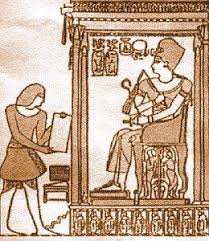
The World Bank estimates international bribery exceeds US$1.5 trillion annually or 2% of global GDP, but corruption is as old as human history; from our ancestors to modern leaders, all do it. Corruption is as old as human history. The First Dynasty (3100–2700 BC) of ancient Egypt noted corruption in its judiciary. The practice also existed in ancient China. In Chinese mythology, every household has a Kitchen God who watches the behaviour of its members. A week before Chinese New Year, the Kitchen God ascends to heaven to present his annual report to the Ruler of Heaven, the Jade Emperor. The fate of the household, whether this be reward or punishment, depends on this report. In an attempt to ensure a good report, many households smear a cake of sugar and honey onto the picture of the Kitchen God they keep in their homes before burning the image, which in Chinese mythology is how the Kitchen God can ascend to heaven to meet the Jade Emperor. Similarily, Greek historian Herodotus notes the Alcmaeonid family bribed the Oracle of Delphi priestesses, one of the most powerful mystical forces of ancient Greek. Dating back to 1400 BC, people all over Greece and beyond came to have their questions answered by the Pythia, high priestess of Apollo. The wealthy Alcmaeonid family offered to lavishly rebuild the Temple of Apollo with “Parian Marble” after it had been destroyed by an earthquake. In return, Pythia convinced the nation-state Sparta to help the family to conquer and rule Athens. Since it worked, Aristotle noted even gods can be bribed! As the global economy expanded significantly during the 20th century, levels of corruption increased as well. It is difficult to estimate the global magnitude and extent of corruption since these activities are carried out in secret. Corruption permeates all levels of society from low-level public servants accepting petty bribes to national leaders stealing millions of dollars. And although it’s greatest victims are the innocents affected, this ugly trait of government still rears it’s ugly head in our own backyard.
Issues and Challenges brought on by Political Corruption
Beyond defining corruption, its consequences have also been analyzed by scholars in various disciplines. They have found that corruption negatively impacts major variables
Developing countries do not have specific strategies or legal systems to determine corruption and, in some cases, it has already been established as normal behaviour that has significant negative impacts on economic growth such as poverty, inequality, economic growth, social welfare, skilled emigration, expenditure on education and health, and civil and political rights. Hence, corruption can negatively affect institutional, social, political, and economic development. In addition, as corruption becomes more pervasive in society, perceptions of injustice, waste of public resources, and political instability increase. These negative impacts are exacerbated under specific conditions,
 Exploring the True Politics